

Coffee Makers With a Built-In Coffee Machine Grinder
Any dedicated java lover knows that getting the perfect cup takes several steps. The motivation to do them at a bleary-eyed morning is often low. Coffee makers that have a built-in grinder make it easier to understand the process, removing the need for measuring and grinding beans in advance.
How to Grind Coffee
It's important to ground your beans prior to brewing if you want the most delicious coffee. Grinding your beans changes the size of the particles and also increases the surface area, making it easier for water to mingle with and extract flavors from the coffee. The length of time between grinding and brewing impacts the quality of your coffee: If you grind beans ahead of time, they will start to oxidize, destroying flavor.
The type of grinder you use will also affect how the coffee is ground. The two main types of grinders are burr grinders and blade grinders. Burr grinders comprise an array of rotating burrs that crush beans into small pieces that are consistent. They're generally quieter than blade grinders and offer more consistency.
Blade grinders, consisting of propeller-like blades that chop the beans into smaller chunks, are available. They're usually noisier and less consistent than burr grinders. However, they are a reasonable option.
It is crucial to only grind the amount of coffee you'll need at any given moment. Some grinders come with hoppers with different capacities, which can affect the number of cups or shots you can grind at once. In addition, different grinders may require a different amount of effort to alter the size of the grind.
If you're using a burr mill, you can adjust the size of the ground particles by turning a collar at the top of the grinder, which moves the burrs closer to each other or further apart. You can also play around with the settings until you have a setting that works well for your brewing process.
It's possible to test a bit with different grind sizes according to the method of brewing you choose to use before you find one that you like. Coffee experts and manufacturers may have recommendations, but ultimately it's up to you to find the right blend for your preferences. You may have read that a French Press is best suited to coarsely-ground coffee or that espresso requires fine-ground coffee. However, these suggestions aren't necessarily accurate: Different brewers require different amounts of heat and water to extract the flavors they create.
Burr Grinders
A burr mill is comprised of two components that lock one stationary and the other rotating. The sharp surfaces of both parts crush the beans as they go through. This lets you regulate the size of your ground which is crucial for a variety of brewing methods. It also produces less heat than blade grinders, preserving the taste of your coffee.
There are two main kinds of burr grinders: flat and conical. Conical burrs feature two cone-shaped rings that have serrated edges that grind against one another making a fine or medium grind. The majority of home grinders have them. Flat burr grinders, on the other hand, have two identical rings with serrated edges that grind against one another to create a coarse to medium grind. They are found in some of the larger commercial grinders.
The geometry of both types of burr mills are different, and this impacts the size distribution of the grinds. They also operate at different speeds, which could affect the flavor of your espresso. A high-quality burr grinder is designed to spin at a low RPM which means it produces less heat and static. A grinder that is less durable will spin at a faster rate. This can lead to the burrs to become stuck and leave behind a residue that could affect the subsequent batches.
Both kinds of burr grinders may be constructed from ceramic, metal or a mixture of the two. Metal burrs tend to be stronger and less susceptible to being damaged. Ceramic is more fragile and may chip and crack when they come in contact with small rocks or other particles.
Most people choose a grinder with burrs because it creates an even, consistent grinding. It may take time to achieve the right consistency and you might need to adjust your grinder's settings when it is running. After each use, clean the grinder to remove any leftover beans or overly roasted ones that may have been stuck between the burrs.
The temperature of the water used to brew your coffee can also influence the granules. If the water is too hot, it will affect the granules, causing them to be burned and alter their taste. The ideal temperature for brewing is 195 degrees Fahrenheit.
Blade Grinders
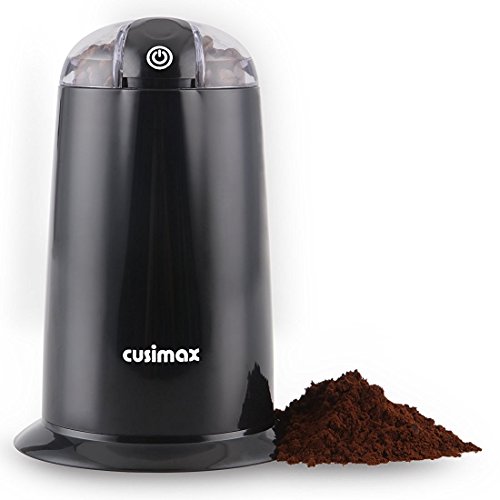
They use a rotating blade to chop the beans. They look like mini blenders and are popular because of their lower price and smaller size. They also work well for those who don't want to drink their coffee black, but prefer to add sugar or other flavors.
The blade grinders cannot provide a uniform size of grind. The chopping action of blades cuts some beans into smaller pieces, and others into larger ones, creating an uneven mixture of grounds that can vary in size from coarse to fine. The uneven distribution of size can result in over- or under-extraction, which will affect the final taste of the cup.
The whirling motion may cause the beans to be burned during the grinding process. This alters the flavor of the resulting coffee since the beans that have burned less surface area for hot water to interact with and extract.
Blade grinders can also be prone to create more dust when they are used which can create a nuisance in tightly packed kitchens. This dust could pose an ill-health risk since it may contain harmful microbes, which can contaminate the final coffee. The sticky residue that blade grinders leave behind could make them difficult to clean.
Burr grinders, on other hand, have two rotating abrasive surfaces that grind beans to a uniform size. The burr grinders do this without the use of adjustable settings. This allows the user to choose the exact size of grind according to the brewing method. The uniform grind permits water to flow smoothly through the grounds, resulting in an even extraction of coffee's flavor profile. Burr grinders are more expensive and require more frequent maintenance, but they are also more durable. Before making a choice, consider your budget and brewing techniques as well as the counter space you have available. It may be worth the extra cost to purchase an artisanal grinder.
Dosing Grinders
As the name implies it is a kind of coffee grinder designed to grind only the amount of coffee needed for brewing. This is a popular type of grinder for home use since it eliminates the need to store ground coffee between uses, and also ensures that the beans are freshest when brewed. This can aid in achieving the highest flavor extraction from coffee, and also help reduce waste.
To accomplish coffee machines with grinder Coffeee , the grinder comes with a built-in chamber that can catch and hold the ground coffee before it is dispensed into the portafilter. It is typically situated at the top of the grinder body and comprises six evenly sized sections. As the coffee leaves the burrs of grinding, it falls into one of the sections. A handle is able to be pulled that regulates the speed at which the sections move. When the sections are rotated the coffee is delivered to your portafilter.
There are a handful of grinders that can perform this successfully. They tend to be the most effective in terms of quality and consistency. (Titan class). There are a lot of grinders that aren't efficient at this, and may produce inconsistent results or overfill your portafilter. This is why we recommend using a single dose grinder for espresso, if you can as well as for other brewing methods, it is advisable to learn to estimate the amount of coffee required.
Rancilio Rocky and Gaggia MDF are some of the most well-known dosing grinders that are available. They're all great options for espresso lovers who live at home. There is also a single dosing model made by Ceado known as the E37SD which has been getting attention in recent years and was recently described as potentially an "Niche Zero Killer". The E37SD has a huge 83 mm OpalGlide coated burr, which produces consistently smooth grinds with almost zero retention and can be adjusted to suit any method of the brewing process.